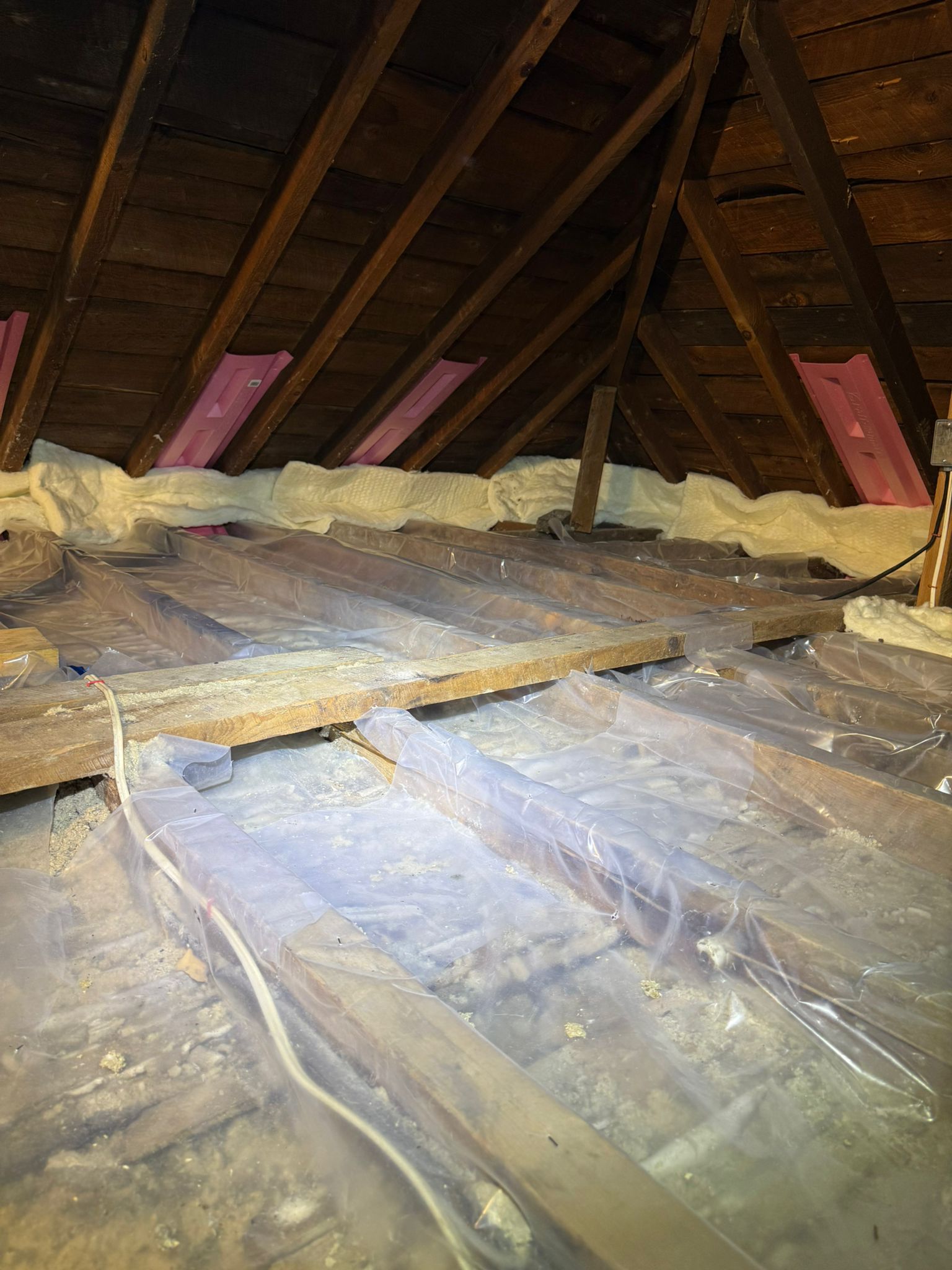

Hamilton has some of the oldest housing in the region alongside brand-new subdivisions, and the two lose heat in different ways. Older homes in the lower city often leak at both ends: through a thin, patchy attic and through an old foundation. Newer homes on the Mountain tend to be tighter but can still be under-insulated overhead.
Whichever you own, a warm winter comes from treating the top and the bottom of the house together.
The top of the house
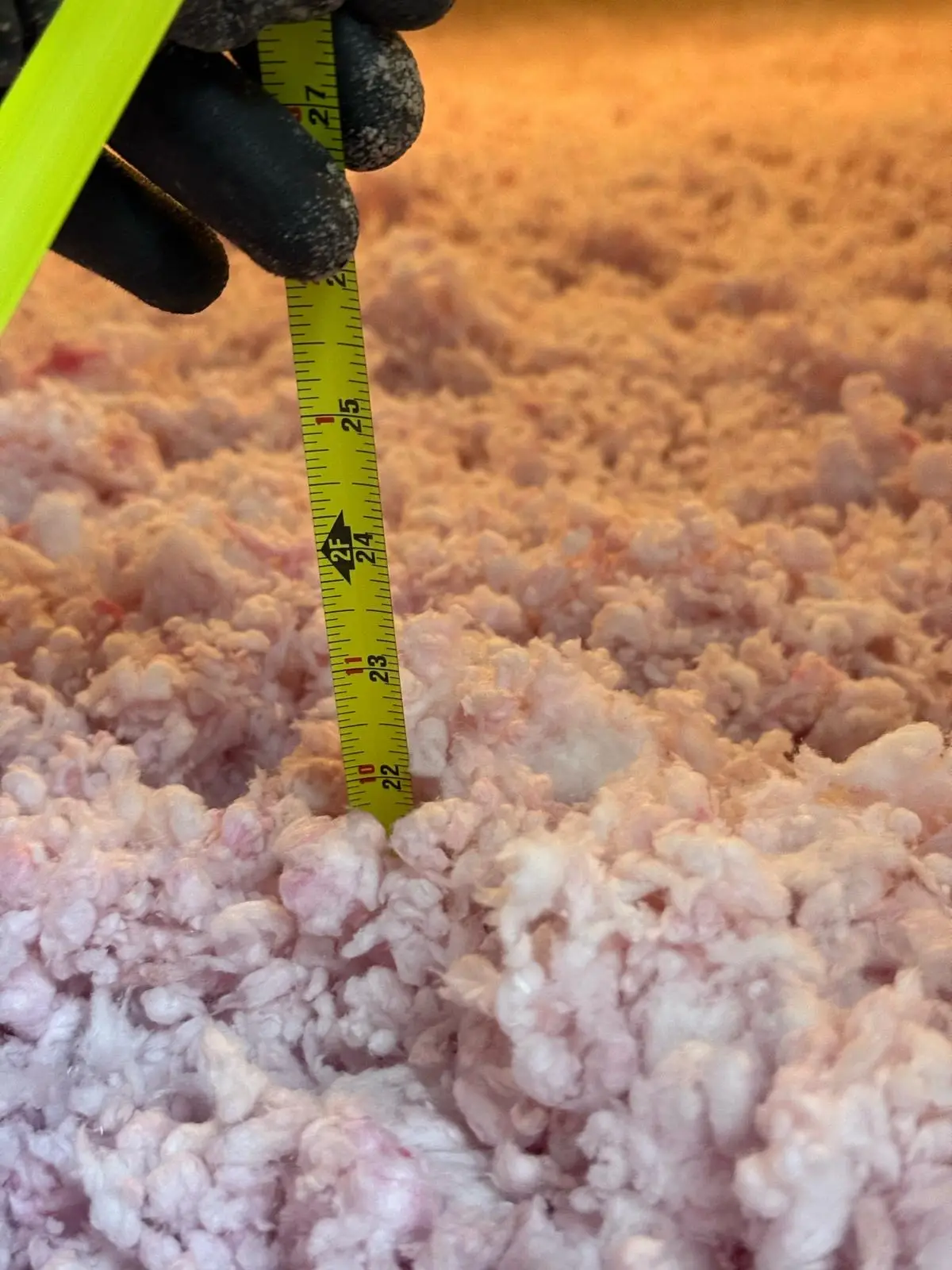
Check the attic insulation
Lift the hatch and look. Uneven, shallow or compressed insulation is the most common finding. Our guide for Hamilton homeowners on knowing when the attic needs more insulation lists what to look for. Your neighbourhood matters too, as we explain in the Mountain, the lower city and a lot of older roofs.
Air seal, then top up
Natural Resources Canada’s Roofs and attics guide is clear that attic air leaks around chimneys, vents, pipes and electrical boxes can account for substantial heat loss. Seal those, then add depth. Our attic insulation service in Hamilton installs cellulose and fibreglass blown-in insulation. For how the approach changes with the age of the house, see century homes to new builds.
Keep it dry and ventilated
Baffles keep soffit vents open. If existing insulation is wet or mouldy, it needs to come out first. See attic mould and insulation removal in Hamilton and our removal service. In older attics, watch for vermiculite and leave it alone until it has been assessed.
The bottom of the house
Crawlspaces and old foundations
Natural Resources Canada points out that basements can lose more heat than a typical attic. Stone and rubble foundations are uneven and leaky, which makes them hard to insulate with batts or boards. Our post on spray foam for crawlspaces and old stone foundations explains why foam suits them, and our spray foam insulation page covers the options.
Moisture control
Where a crawlspace has an exposed floor, a vapour barrier helps keep ground moisture out of the house.
The middle of the house
Walls
Many older homes have empty wall cavities. Drill and fill insulation fills them from outside or inside with minimal disruption.
Windows and doors
Weatherstripping and caulking are the cheapest comfort upgrade you can make. Natural Resources Canada’s materials guide covers what to buy.
What the numbers say
According to the U.S. EPA, homeowners save an average of 15% on heating and cooling costs by air sealing and adding insulation in attics, floors over crawl spaces and basements (ENERGY STAR). That is a modelled U.S. average, so your own result will vary.
Rebates in Hamilton
There is more than one program, and they suit different households. See paid, free, and which fits you or our energy rebate page. Confirm current terms before you book.
Book a look at both ends
We will check the attic and the foundation and tell you which one to fix first. Contact us for an estimate.