Hamilton has two very different housing landscapes. Below the escarpment, neighbourhoods like Durand, Kirkendall, Westdale and Crown Point are full of century brick homes with steep roofs, chimneys and attics that have been renovated many times over. Up on the Mountain, and out in Stoney Creek, Ancaster and Waterdown, you’ll find postwar bungalows, side-splits and newer subdivisions.
The homes are different, but attic mould shows up in both for the same basic reason: indoor moisture gets into the attic and can’t get back out.
What Causes Attic Mould in Hamilton Homes
In century homes below the escarpment:
- Air leaks around old chimneys, plaster ceilings and light fixtures
- Little or no soffit ventilation
- Knob-and-tube-era ceilings opened and patched over decades
- Thin or missing insulation in places
In bungalows and newer homes:
- Settled original insulation
- Bathroom fans venting into the attic
- Blocked soffit vents
- Unsealed attic hatches
Winter: When Mould Starts
Hamilton winters bring cold nights and freeze-thaw swings. When warm indoor air leaks into the attic, it condenses on the cold roof boards and freezes as frost. Over weeks, that frost builds up.
Typical winter clues:
- Ice dams on the eaves
- Frost on nail tips visible through the attic hatch
- Drafts and cold spots in upstairs rooms
Freeze-thaw swings can melt and refreeze that frost several times in one winter, keeping the wood wet for longer.
Spring: The Evidence Appears
As temperatures rise, the frost melts into the sheathing and insulation. Hamilton homeowners often notice:
- Water stains on plaster or drywall ceilings
- A musty smell upstairs
- Mould spots on the roof boards, often worst on the north slope
In century homes, spring is also when chimney flashing leaks tend to show up.
Summer: Humidity Hangs On
Hamilton summers can be hot and humid, particularly in the lower city. A poorly ventilated attic holds that humid air. AC ducts in the attic that aren’t sealed and insulated can sweat and drip.
Fall: Prepare Your Attic
- Clear leaves from eavestroughs
- Check that exhaust fans vent outdoors
- Make sure soffits aren’t blocked
- Seal around chimneys and the attic hatch
- Top up insulation before winter
How We Treat Attic Mould
- Assess the area. Health Canada considers a mould area under about 1 square metre small. A single patch over about 3 square metres is large and should be handled by a qualified professional.
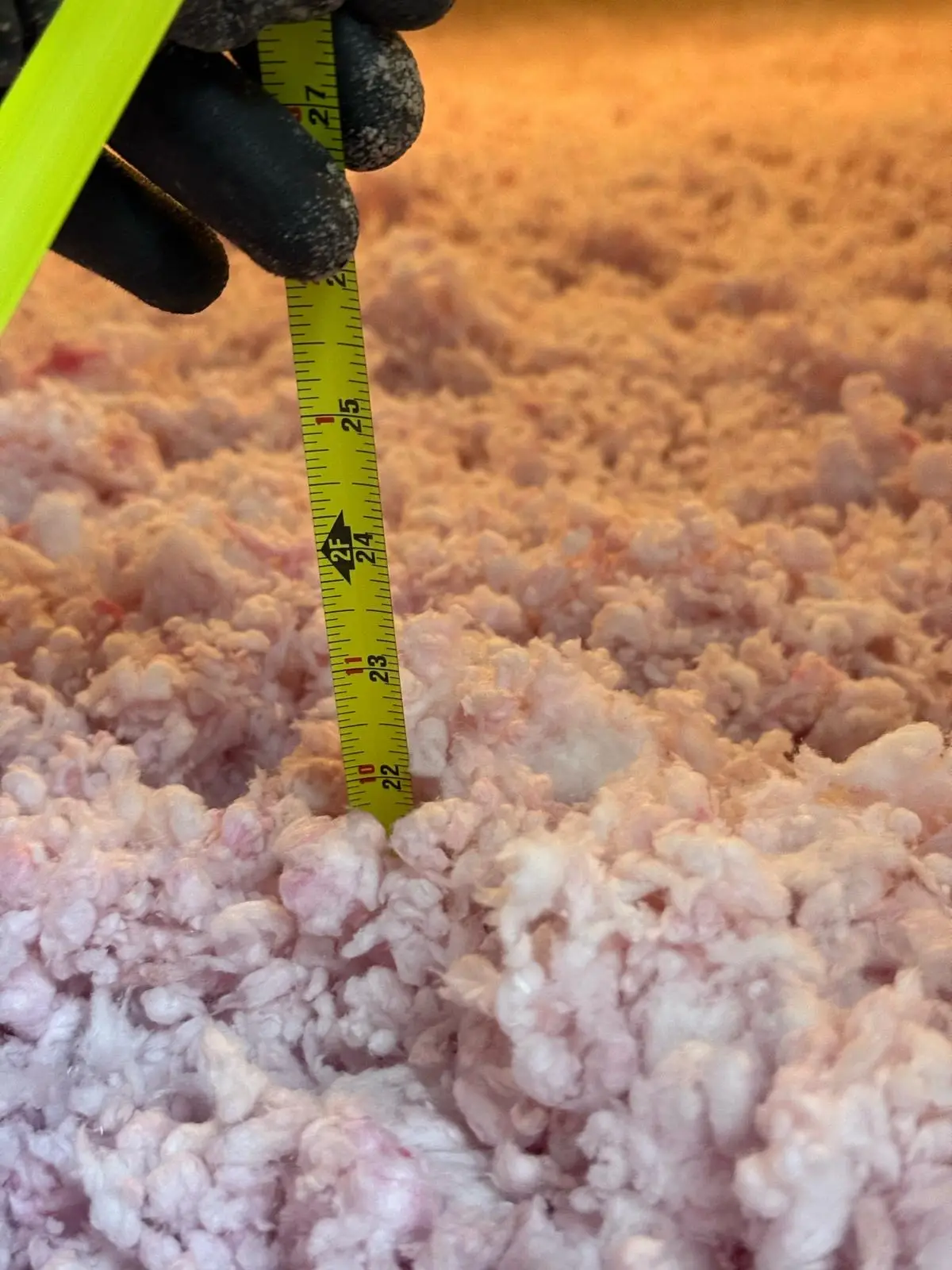
- Remove damaged insulation. Our attic insulation removal service in Hamilton clears out wet or contaminated material.
- Clean the wood. Surface mould is cleaned and the wood dried. Rotted boards may need a roofer.
- Seal leaks. Seal around chimneys, fixtures, wires and pipes. For older homes with many hidden gaps, AeroBarrier air sealing seals the whole home from inside.
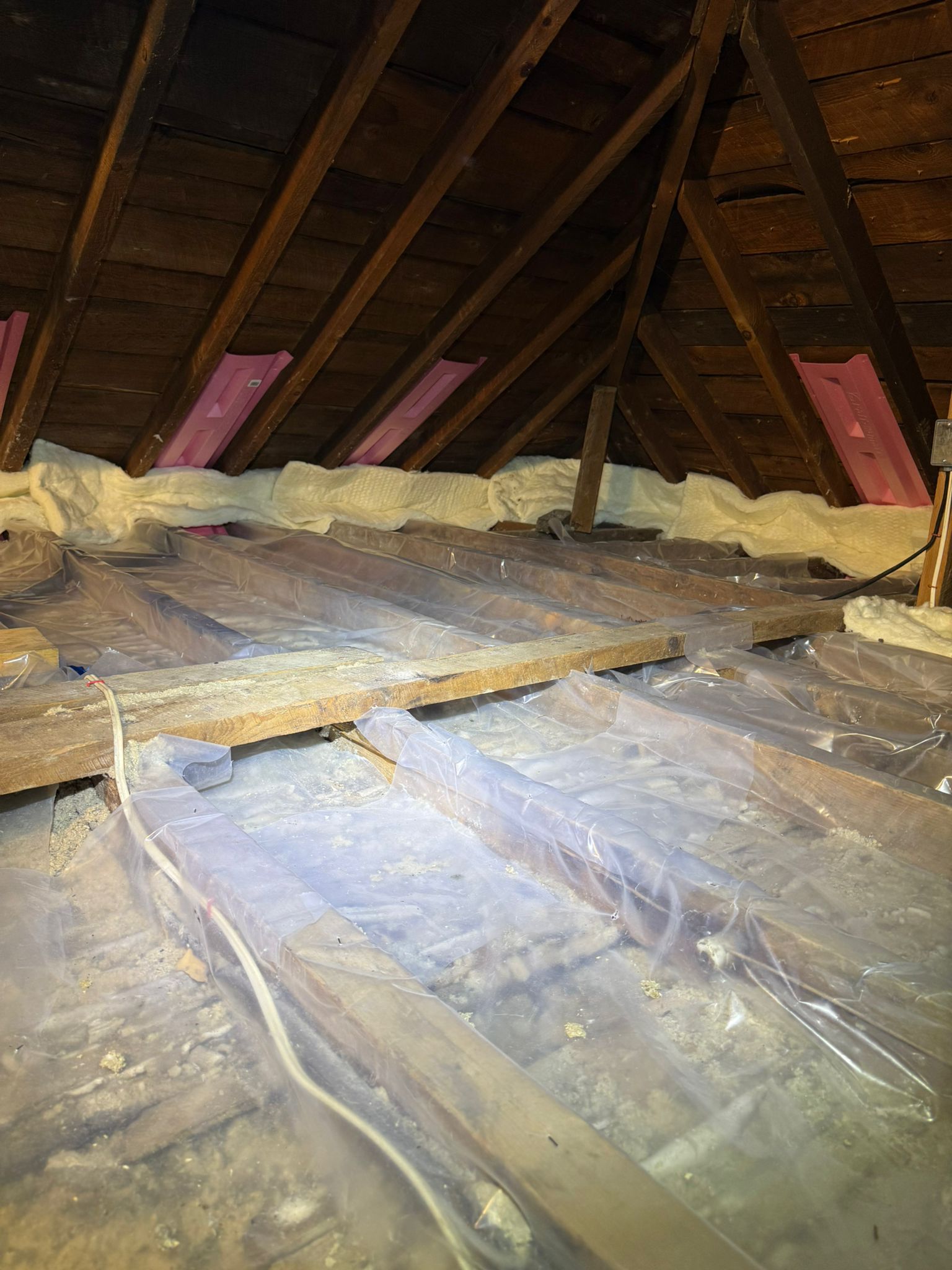
- Improve ventilation. Install baffles, vent fans outdoors and add a vapour barrier where needed.
- Re-insulate. Cellulose blown-in insulation fills the uneven framing common in century homes. Fibreglass blown-in suits many bungalow attics. For sloped ceilings, 2 lb closed-cell spray foam insulates and air seals at once. See all spray foam insulation options in Hamilton.
Replace damaged ceilings, and use moisture-resistant drywall in bathrooms.
Prevention Tips for Hamilton Homeowners
- Air seal the attic floor and around chimneys
- Keep soffit-to-roof airflow open
- Vent fans outdoors
- Insulate to current levels (attic insulation in Hamilton)
- Run bathroom fans during and after showers
- Inspect in spring and fall
Upgrades may qualify for rebates. See our home renovation rebate page.
Frequently Asked Questions
Are century homes more likely to get attic mould?
They often are, because they have more air leaks and less ventilation. With proper sealing and ventilation, they can stay dry.
Do plaster ceilings need special care during attic work?
Yes. Plaster ceilings can crack if the attic floor is disturbed, so the work needs care.
Is attic mould common in newer Hamilton homes?
It happens less often, but disconnected fan ducts or blocked soffits can cause it.